
Exporting Cosmetics, Chemicals, and Industrial Raw Materials: When Is MSDS Required?
Global trade in chemicals, cosmetics, and raw materials expands continuously. Exporters ship vast quantities of active ingredients worldwide daily. However, international regulatory compliance presents complex requirements for trade partners. Navigating chemical documentation remains a critical challenge for exporters. Knowing exactly when a Material Safety Data Sheet is required ensures smooth operations. Proper compliance prevents unnecessary delays and financial losses during international shipping.
The Regulatory Role of MSDS in International Export
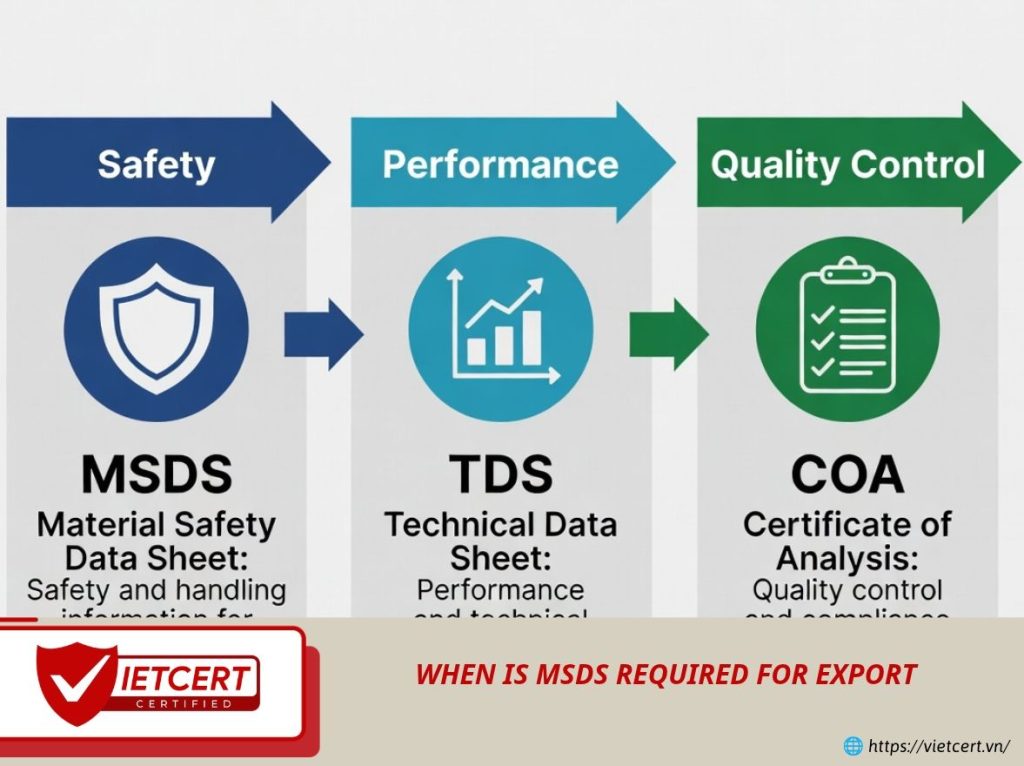
A Material Safety Data Sheet provides comprehensive chemical safety information. It outlines physical properties, health hazards, and environmental impacts clearly. Authorities require this document to ensure safe handling across transport chains.
International customs agencies inspect safety data sheets during export procedures. Officials verify cargo classifications against national hazardous material registries. Without a compliant SDS, shipments face immediate border detention. Exporters must present updated documentation to clear customs efficiently.
Logistics service providers also demand safety data sheets before acceptance. Airlines and shipping lines verify cargo stability using technical safety data. Carriers refuse unclassified chemical cargo to protect transport infrastructure. Therefore, safety documentation forms the foundation of modern export compliance.
When Is MSDS Required for Cosmetic Products and Ingredients?
Cosmetic exports include finished personal care products and raw formulations. Many exporters falsely assume finished cosmetics are completely exempt from MSDS rules. However, regulatory requirements depend heavily on product state and transport modes.
Finished cosmetics like creams, shampoos, and lotions appear safe generally. Yet, products containing alcohol or pressurized gases require safety documentation. Fragrance sprays, hairsprays, and nail polishes contain volatile organic compounds. Carriers classify these cosmetic items as flammable dangerous goods during air transit. Consequently, exporters must supply a valid MSDS for international transport booking.
Raw cosmetic ingredients mandate an MSDS without exception. Concentrated essential oils, chemical preservatives, and active botanical extracts present real risks. Bulk ingredients often possess higher toxicity levels than finished formulations. Overseas buyers require detailed safety data before importing bulk raw materials.
Furthermore, international customs authorities scrutinize cosmetic raw materials carefully. Importers must demonstrate compliance with local cosmetic safety regulations. The safety data sheet supplies necessary toxicological profiles for product registration. Providing clear documentation accelerates regulatory clearance in destination countries.
Mandatory MSDS Requirements for Industrial Chemical Exports
Industrial chemical exports encompass a wide spectrum of synthetic substances. Solvents, acids, industrial adhesives, and specialty reagents belong to this category. Regulators classify most industrial chemicals as hazardous materials outright.
Exporters must provide an SDS for every industrial chemical shipment. The document must follow the 16-section format specified by global GHS standards. It must detail hazardous decomposition products and reactive storage risks accurately. Missing technical details lead to shipment rejections at international ports.
Even non-hazardous industrial chemicals require safety verification documents. Shipping lines often request a non-hazardous SDS declaration. This document proves the chemical substance poses no transport dangers. Providing verified documentation eliminates ambiguity during carrier inspection procedures.
Bulk chemical shipments require additional safety precautions during transit. Tank containers and bulk drums must match safety sheet specifications precisely. Hazard pictograms on containers must align with SDS section details. Inconsistencies between labels and documents cause severe customs penalties.
When Are Raw Materials Required to Have an MSDS?
Raw materials serve as building blocks for manufacturing industries globally. Polymers, minerals, metal powders, and agricultural chemicals fit this classification. Determining MSDS requirements for raw materials involves several key factors.
First, physical form dictates chemical safety requirements significantly. Solid minerals in large blocks may seem completely inert and harmless. However, processing those minerals into fine powders creates severe inhalation hazards. Exporters must provide an MSDS if raw materials generate hazardous dusts.
Second, chemical purity and concentration levels determine document necessity. High-purity raw materials often exhibit reactive properties under heat. Impurities within raw materials might also introduce unexpected toxic hazards. Exporters must evaluate raw material compositions to author compliant safety sheets.
Finally, international buyers demand safety data for quality assurance purposes. Manufacturers need detailed component profiles to ensure safe factory processing. Providing an accurate MSDS builds trust with international manufacturing clients.
Key Triggers That Require an Updated MSDS for Export
Exporters must recognize specific operational triggers demanding a new MSDS. Understanding these triggers prevents unexpected non-compliance issues during shipping.
Re-formulating products alters chemical composition and safety profiles immediately. Adding new solvents or changing ingredient concentration ratios alters hazard levels. Exporters must issue updated safety sheets whenever product formulas change.
Regulatory updates also trigger mandatory safety document revisions. National environmental agencies update toxicological classifications periodically worldwide. An outdated safety sheet fails compliance checks under revised local laws. Exporters must review documentation annually to maintain international compliance.
Changing transport modes requires updating specific documentation sections. Moving cargo from sea transport to air freight introduces stricter rules. Air carriers enforce rigid pressure differential standards for liquid chemicals. Exporters must ensure safety sheets reflect appropriate transport mode specifications.
Best Practices for Exporters to Ensure Compliance
Exporters should implement robust document management practices within their organization. Maintaining an organized digital library ensures fast access to safety sheets.
Working with accredited chemical testing laboratories guarantees accurate hazard assessments. Professional experts help author GHS-compliant documents in multiple languages. Translating safety sheets into destination languages ensures smooth customs entry.
Proactive compliance management reduces export risks and optimizes international logistics. Investing in proper safety documentation protects business reputation and accelerates global trade.
Read more:
Expired or Incorrect MSDS: Risks Businesses Face in Import and Export
Who Is Responsible for Preparing and Providing MSDS/SDS in the Supply Chain?
